Urging motion to a Polish authority (Art. 37 of the Code of Administrative Procedure) — how to write, where to file, deadlines
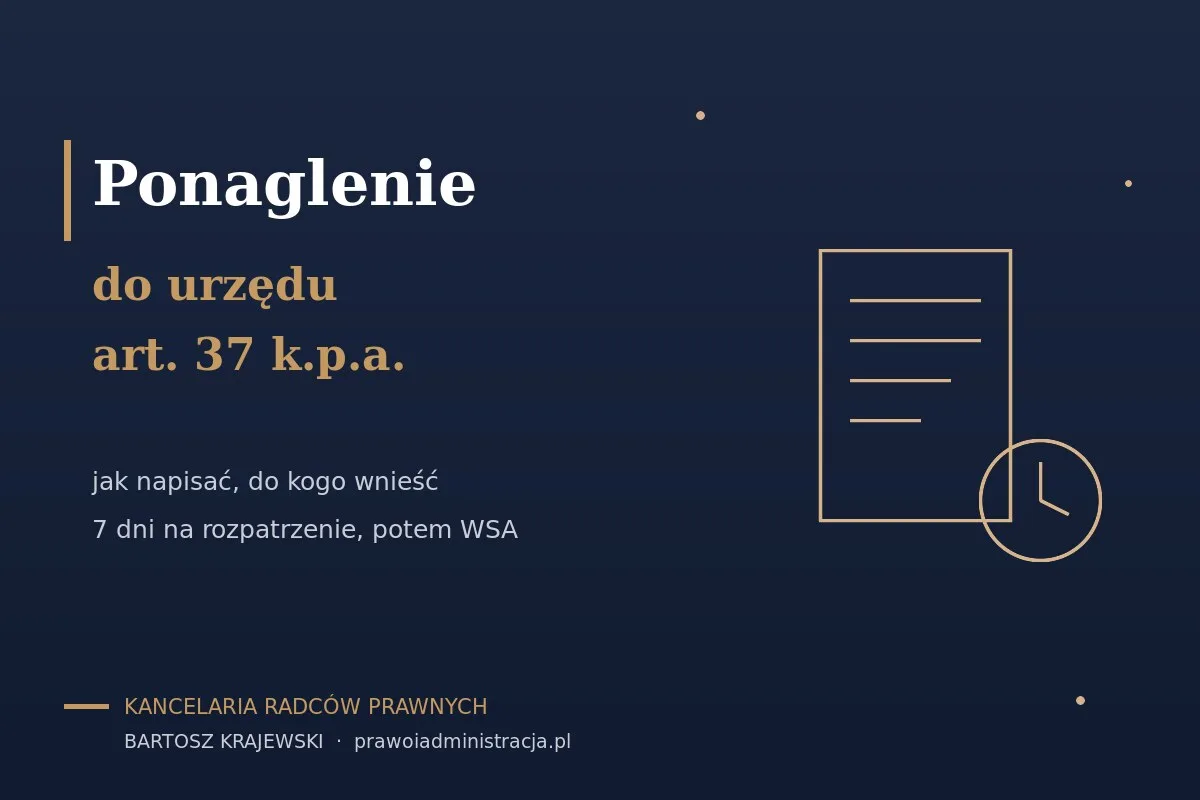
The urging motion is the only remedy in the Polish Code of Administrative Procedure against an authority that stays silent — and the condition without which the administrative court will not accept a complaint about inactivity. It works the same way in a building permit case, a registration of residence, a car registration, a licence or a residence card, because all of them follow the same code. Below we explain when the motion is available, to whom it is addressed, what it must contain and what the authority has to do within 7 days. If you prefer the letter to be written and signed by an attorney-at-law, order an urging motion online for 199 PLN.
When you can file an urging motion — deadlines under Art. 35
Article 37 § 1 of the Code gives the right to file an urging motion in two situations: when the authority has not handled the case within the deadline (inactivity) or when it conducts the proceedings longer than necessary (excessive length). The deadline runs from the start of the proceedings, i.e. the day the application reaches the authority (Art. 61 § 3 of the Code); the time you spent completing the application at the authority's request does not count (Art. 35 § 5). The deadline is set by Art. 35 of the Code and by special provisions:
- without delay — cases that can be decided on the evidence filed with the application or on data the authority already holds (Art. 35 § 2);
- one month — cases requiring explanatory proceedings, and two months — particularly complex cases; in appeal proceedings one month from receipt of the appeal (Art. 35 § 3);
- other deadlines in special provisions (Art. 35 § 4): 65 days for a building permit (Art. 35(6) of the Construction Law, with a financial penalty for the authority for every day of delay), 60 days for a temporary residence permit (Art. 112a of the Act on Foreigners);
- a new deadline set by the authority itself — when it cannot keep the deadline, it must notify you of the reasons, set a new date and inform you of the right to file an urging motion (Art. 36 § 1); only exceeding that date is inactivity.
Excessive length is subtler: the authority formally does something — summons, consults, waits for an opinion — but stretches it beyond need. A motion filed before the deadline expires is left unexamined (Art. 37 § 3a), so the filing date matters. How deadlines are counted in the most common foreigners' case is shown separately in our article urging motion in a residence card case.
To whom the urging motion is addressed — Art. 37 § 3
You do not file the motion “with the office” that is silent, but over its head. The Code provides two routes:
- to the higher-level authority, but through the authority conducting the proceedings — you address the letter to the superior body and file it with the office handling your case;
- directly to the authority conducting the proceedings, if there is no higher-level authority above it — for example a minister, or the Head of the Office for Foreigners in an appeal case;
- in practice: above a commune head or city mayor there is the local government appeal board, above a district governor in construction cases — the voivode, above the voivode in residence cases — the Head of the Office for Foreigners.
A wrongly addressed motion is the most common mistake we see in letters written without a lawyer. The authority then has a convenient reason to do nothing with it, and you lose weeks and go to court with a letter that was not an urging motion to the competent authority.
What the urging motion must contain
The Code requires one thing: the motion must contain a justification (Art. 37 § 2). In practice an effective justification has four elements:
- the case reference number and the date the proceedings started — the deadline runs from it;
- the deadline under Art. 35 or a special provision and by how much it has been exceeded; if the authority set a new date under Art. 36, that date too;
- a short history of the case: when you supplemented the file, when the last letter from the authority came, that the delay is not on your side;
- the demand: a finding of inactivity or excessive length, an obligation for the authority to decide within a set deadline and an explanation of the reasons for the delay.
The motion is signed by the party or an attorney. It carries no stamp duty, and 17 PLN is paid for the power of attorney. It is filed in writing, via the e-Delivery mailbox or by registered mail — always so that a date of receipt is recorded, because the authority's deadlines run from it.
What the authority must do after receiving the motion — 7 days and 7 days
The authority conducting the case forwards the motion to the higher-level authority without undue delay, within 7 days of receipt at the latest, together with the necessary copies of the file and its own position (Art. 37 § 4). The higher-level authority examines the motion within 7 days (Art. 37 § 5) and issues a ruling stating whether there was inactivity or excessive length and whether it was a flagrant breach of the law; if so, it sets a deadline for the case and orders the reasons to be explained and the persons responsible identified (Art. 37 § 6).
When the motion is examined by the same authority, because there is none above it, after finding inactivity it must handle the case without delay (Art. 37 § 8). The motion does not guarantee a decision date — no honest lawyer will promise one — but it turns silent waiting into a document that stays in the file and obliges the authority to explain itself. That record is exactly what the next step needs.
After the motion — a complaint about inactivity to the administrative court
A complaint about inactivity or excessive length may be filed at any time after an urging motion has been filed with the competent authority (Art. 53 § 2b of the Law on Proceedings before Administrative Courts) — without the motion the court rejects it. The complaint is filed through the authority concerned, which has 30 days to forward it to the court with the file and its reply (Art. 54 § 1 and 2). The court fee is 100 PLN.
When the court upholds the complaint, it obliges the authority to decide within a set deadline, finds inactivity or excessive length and whether it was a flagrant breach of the law, and may also fine the authority or award you a sum of money from it (Art. 149). How this path looks step by step in a case handled by a voivode is described in our article complaint about the voivode's inactivity to the administrative court.
Cases in which we urge authorities most often
The urging motion under Art. 37 is available in every proceeding conducted under the Code, whether the authority is municipal, district, regional or central. In our practice these are most often:
- building permits and zoning decisions — the district governor or city mayor, above them the voivode; for building permits a financial penalty for the authority applies after 65 days;
- registration of residence, PESEL number and civil status matters — commune authorities, above them the voivode;
- vehicle registration, driving licences, permits and licences — the district governor or a sector authority, above them the local government appeal board or the competent minister;
- residence card, work permit, citizenship — the voivode, above him the Head of the Office for Foreigners or the minister;
- social security (ZUS) benefits are the exception: there is no urging motion there, and when ZUS does not decide within 2 months of the application you may appeal straight to court (Art. 83(3) of the Social Insurance System Act).
If you do not know which body is the higher-level authority in your case, we check it before the letter is sent. The full scope of our help in administrative cases is described on the page administrative law — help from our firm in Warsaw.
What not to do when the authority is silent
Do not send more e-mails asking to speed things up — they have no legal effect and do not stay in the file as an urging motion. Do not file the motion in the second week of the case, because a premature one is left unexamined. Do not give up after the motion is dismissed — that is the moment the way to court opens. And do not write the letter “your own way” from a template found online: a wrong addressee or a missing justification costs months. When an administrative case needs an attorney-at-law, we explain in our article administrative law firm in Warsaw.
Do not confuse the urging motion with an appeal either. The motion concerns a case in which there is no decision yet. If a decision has been issued and the appeal deadline has passed, a different remedy applies — we explain it in our article reinstatement of the deadline to file an appeal.
Urging motion online for 199 PLN — how it works
You fill in a form: the authority handling the case, the reference number, the application date and the last letter from the office. You pay 199 PLN and sign the power of attorney — with a photo from your phone or an electronic signature. An attorney-at-law writes the motion, addresses it to the higher-level authority and sends it no later than the next working day after receiving the power of attorney; you get a copy by e-mail on the day it is sent.
If the authority stays silent, the package of an urging motion plus a complaint about inactivity to the administrative court costs 1199 PLN — the 100 PLN court fee and the 17 PLN stamp duty on the power of attorney are covered by the firm. Kancelaria Radców Prawnych Bartosz Krajewski handles such cases throughout Poland, because both the motion and the complaint are filed electronically. Start with the letter that stays in the file: order an urging motion to the authority.
Frequently asked questions
When can I file an urging motion with a Polish authority?
To whom is the urging motion addressed?
What must an urging motion contain?
How long does the authority have to examine the motion?
Does the urging motion cost anything?
What if the authority still does not decide after the motion?
Does the urging motion also work in ZUS cases?
Related articles

Urging Letter (Ponaglenie) for a Residence Card in 2026 — How to Make the Warsaw Office Decide
The office has been silent for months and the statutory deadline is long gone? You have concrete legal tools: an urging letter (ponaglenie) under Art. 37 of the Code of Administrative Procedure, followed by an inactivity complaint to the administrative court — up to and including a fine for the office and money for you.
Read more →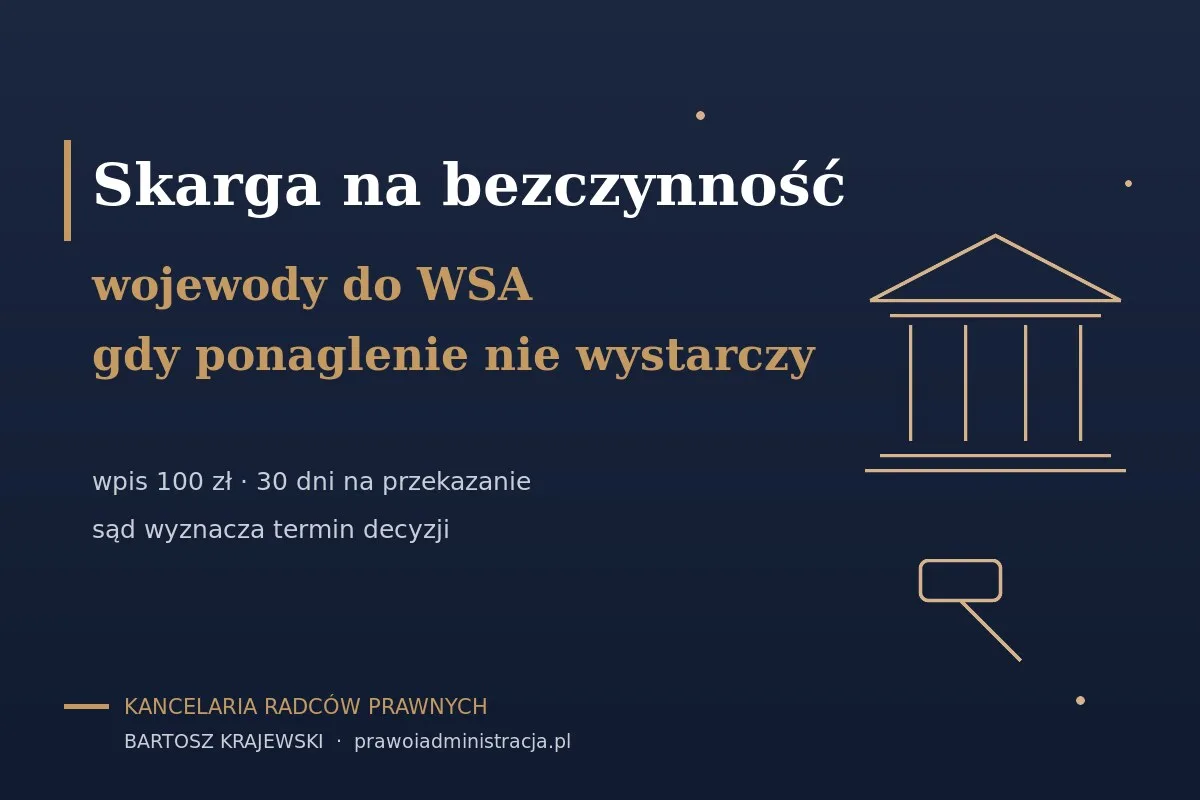
Complaint About the Voivode's Inaction to the WSA — When to File It and What It Costs (2026)
The ponaglenie did not help and there is still no decision in your residence case? The next step is a complaint about inaction to the voivodeship administrative court — the court can order the voivode to issue a decision by a specific date.
Read more →
Appealing an administrative decision — deadlines, complaint to the WSA and NSA
An appeal against an administrative decision must be filed within 14 days, a complaint to the WSA within 30. Here is how a dispute with a Polish authority works and how a Warsaw law firm can help.
Read more →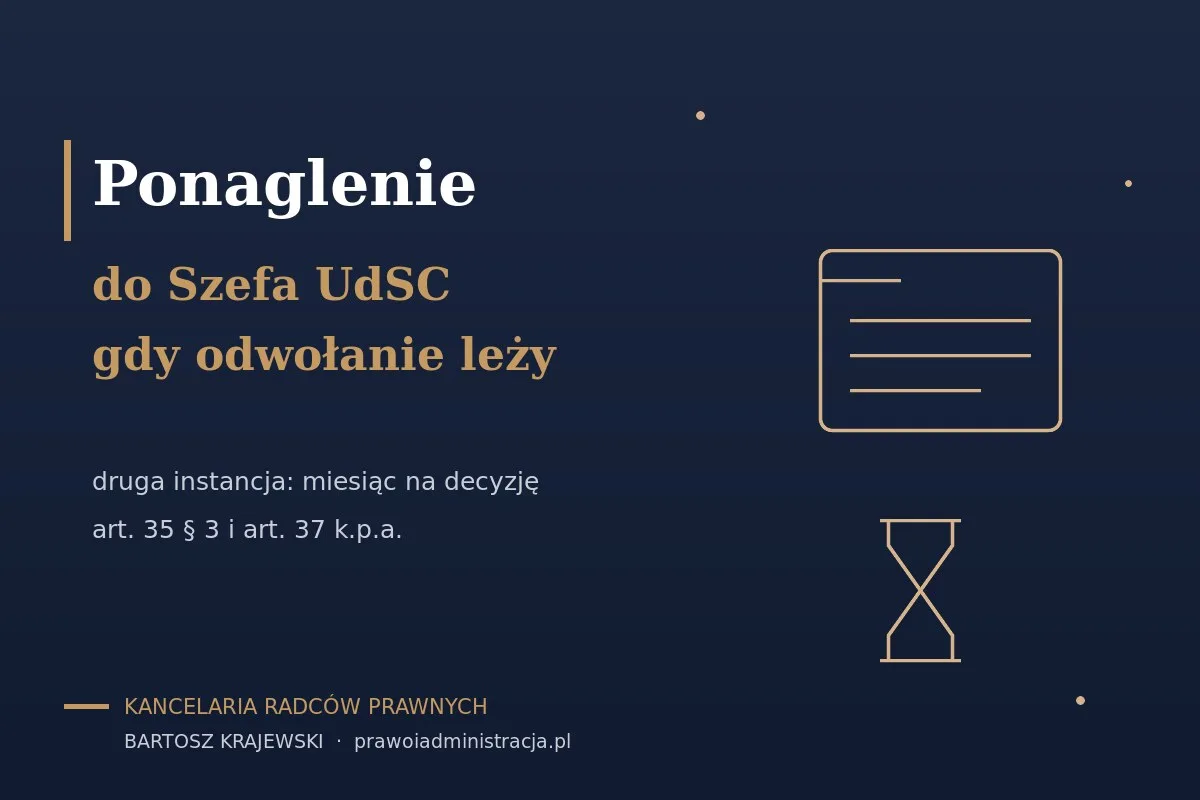
Ponaglenie to the Head of UdSC — When Your Residence Card Appeal Sits for Months
Appeal sent, and silence from the Head of the Office for Foreigners? Appeal proceedings also have a statutory deadline, and once it passes you can file a ponaglenie — only it goes somewhere other than in the first instance.
Read more →